


White Brass Ganesha Idol with Turquoise & Coral Stone Inlay 13 Inch Tibetan Style
White Brass Ganesha Idol with Turquoise & Coral Stone Inlay 13 Inch Tibetan Style
🎁 NEW OFFERS:
Use Coupon OFF10 to Get 10% Discount On Order Above Rs. 5,000
Use Coupon AC250 to Get Instant Rs. 250 Discount On Order Above Rs. 3,000
Free Shipping On Order Value Above Rs. 1,000. Use Coupon FREESHIP
Couldn't load pickup availability
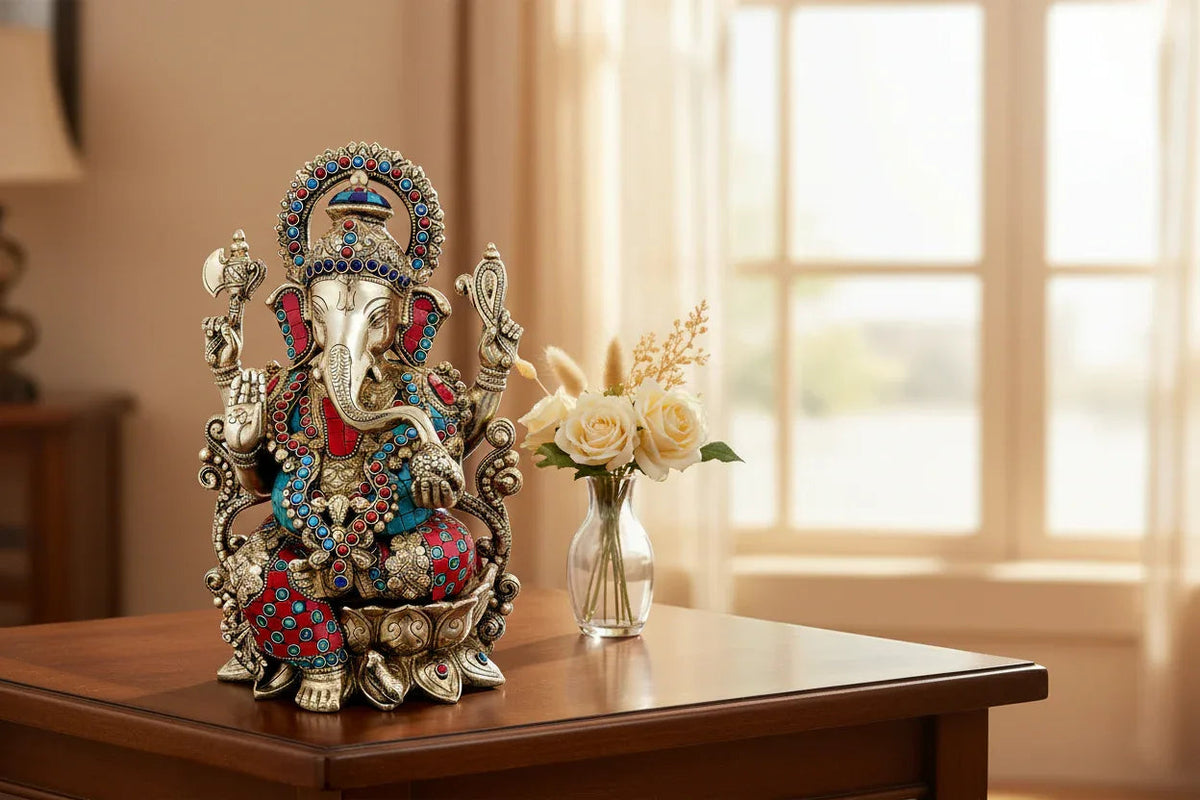
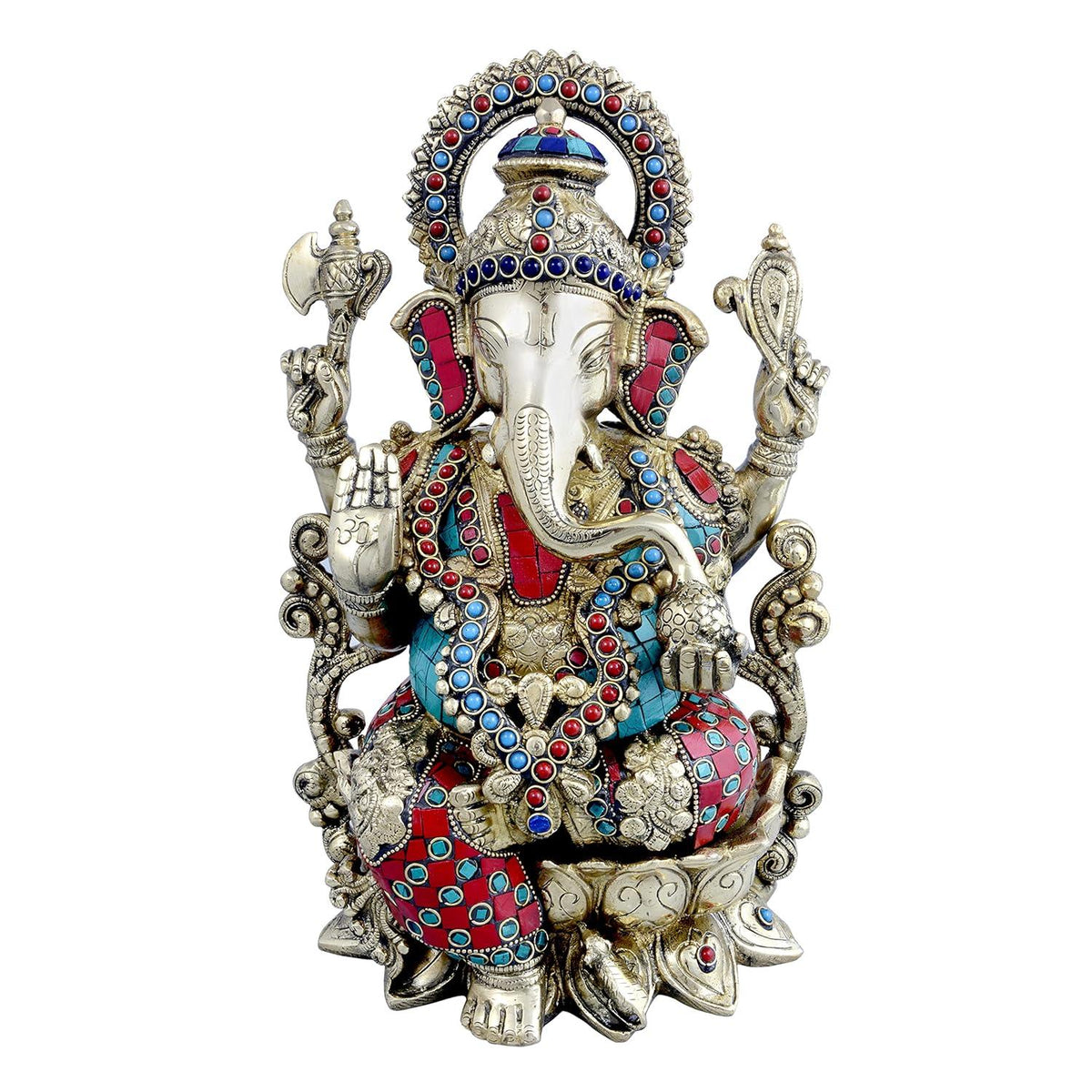
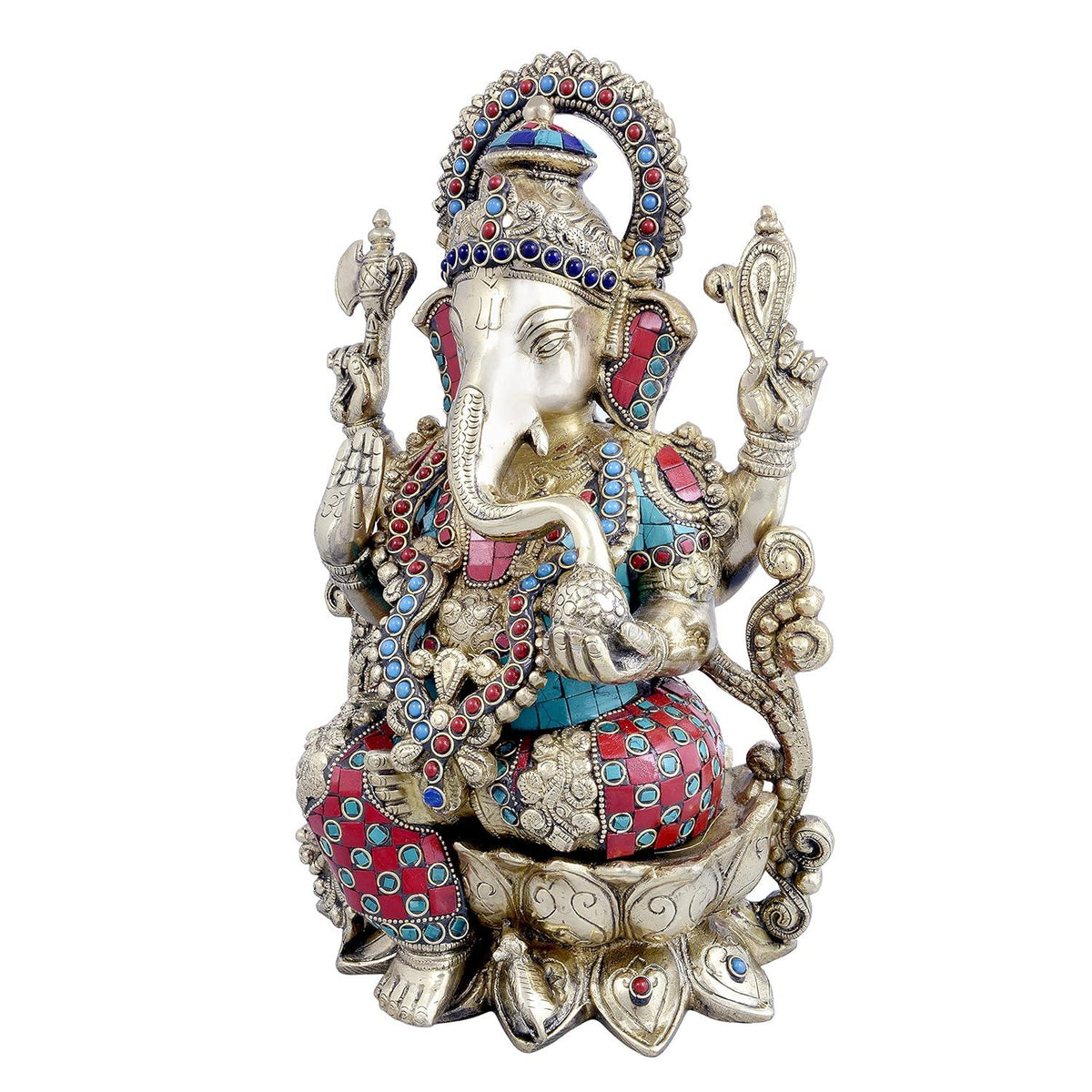
Brass Chaturbhuja Ganesha Wearing A Carved Dhoti
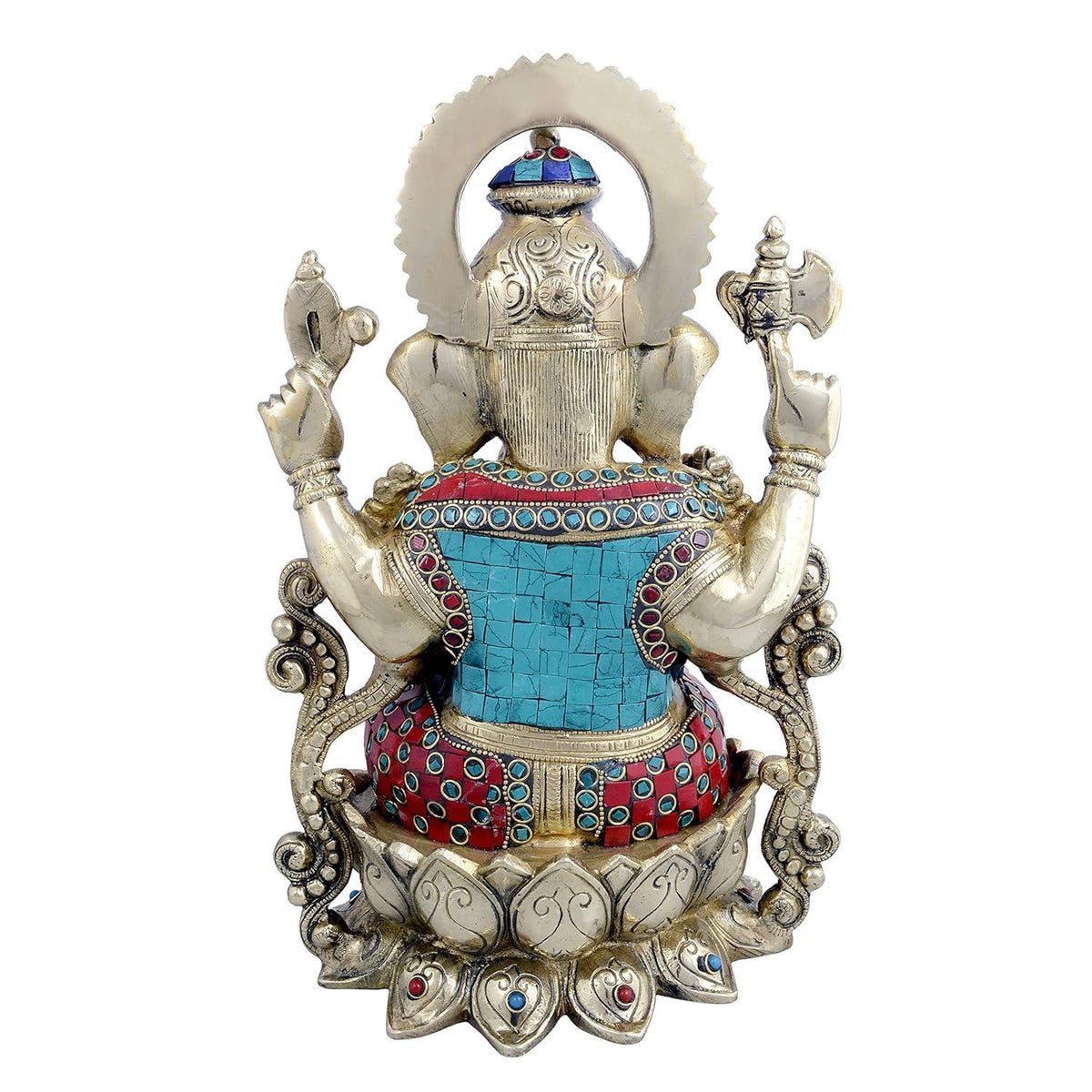
This 13-inch white brass Ganesha with turquoise and coral stone inlay is emphatically that kind of piece. The silver-tone white brass base metal. The vivid turquoise and deep coral red stones set in mosaic panels across every surface, the crown, the ears, the chest, the dhoti, the halo arch, the lotus base.
| Material | Solid white brass |
| Color | Turquoise, coral red, and lapis lazuli |
| Product Dimension | Height: 12.9 inches x Width: 9.5 inches x Depth: 6.4 inches |
| Weight | 8.6 kg |
| Use | Pooja room, home mandir, living room, collector display, gifting |
| Sold by | Rachana Traders |
The Om symbol is engraved into the open palm of the blessing hand. The scrollwork that flows from the sides of the lotus base. Every element of this idol was made by someone who understood that sacred art has two responsibilities: to be beautiful enough to stop you, and to be meaningful enough to hold you once it has. At 8.6 kilograms of solid brass, it will do both, for as long as you keep it.
About This White Brass Ganesha with Stone Inlay
The term "white brass", also known as white metal alloy or German silver in the craft tradition, refers to a brass composition with a higher proportion of zinc and other metals that produces a silver-white tone rather than the warm gold of standard brass. It is widely used in the Tibetan and Nepalese Buddhist and Hindu sacred art traditions, where the silver tone is associated with lunar energy, purity, and the luminous quality of enlightened awareness.
In Rajasthani and Tibetan sacred metalwork, white brass has been the preferred base metal for stone inlay work for centuries, precisely because its cool silver tone creates a visual ground against which coloured stones appear at their most vivid and saturated. The turquoise reads more intensely against silver than against gold. The coral red glows more warmly. The blue lapis appears deeper. The combination of white brass and multicolour stone inlay is not an aesthetic accident. It is a tradition with centuries of visual logic behind it.
This Ganesha honours that tradition fully. Every surface that is not white brass is stone, and every stone has been individually set by hand into its own prepared socket in the metal. The turquoise panels across the chest, dhoti, and halo arch are not a single piece of stone but a mosaic of individually cut and set turquoise pieces, the Tibetan stone inlay technique called Lhasa work, in which stone is cut to fit specific areas of the metal surface and set flush with remarkable precision. The coral red stones, both the large dome-set cabochons and the smaller mosaic pieces, are set with the same method and the same precision. The deep blue lapis lazuli cabochons at the crown and along the halo arch complete the three-stone palette that is characteristic of the finest Tibetan sacred metalwork.
The Three Sacred Stones and Their Significance
The three stones used in this idol, turquoise, coral, and lapis lazuli, are not chosen arbitrarily. They are the three sacred stones of Tibetan and Himalayan sacred art tradition, each carrying specific spiritual and symbolic meaning:
Turquoise, the Healing Stone: In Tibetan Buddhist tradition, turquoise is the stone of healing, protection, and good fortune. It is associated with the sky and water, the two elements that sustain life, and with the quality of compassion. In Tibetan thangka painting and bronze sculpture, turquoise is used wherever the qualities of healing and compassionate protection need to be visually embodied. Its presence across the chest and dhoti of this Ganesha marks him as a deity of compassionate protection, which he fundamentally is.
Coral Red, the Stone of Vitality: Red coral in Tibetan and Hindu sacred art tradition is associated with life force, vitality, good luck, and the removal of obstacles, making it perhaps the most directly aligned stone with Ganesha's own nature as Vignaharta. The large coral dome cabochons that stud the crown, ears, and garments of this idol create the most vivid visual element of the entire composition, a warmth and vitality that gives the piece its extraordinary energy.
Lapis Lazuli, the Stone of Wisdom: Deep blue lapis is the stone of divine wisdom, truth, and cosmic awareness in Hindu, Buddhist, and ancient Near Eastern sacred traditions. Its presence at the crown and along the arch of this Ganesha marks him as a deity of wisdom, which the son of Shiva, the patron of scholars and the lord of the intellect, most certainly is.
The Om Symbol on the Palm, Why It Matters
One of the most quietly significant details of this idol, easily missed on first viewing, impossible to forget once noticed, is the Om symbol engraved into the open palm of Ganesha's Abhaya Mudra blessing hand.
The Abhaya Mudra, the open palm raised toward the devotee, is already one of the most meaningful gestures in Hindu sacred art. It says: I see you. You are safe. Do not fear. But this Ganesha takes that gesture one step further by placing the sacred Om symbol at its very centre, in the palm itself, where the blessing originates, where the protection radiates from.
The Om symbol is the primordial sound of creation, the first vibration from which all of existence emerged. By placing it in the blessing palm, this composition suggests that Ganesha's protection is not merely personal, it is cosmic. His blessing is not just "you will be okay." It is the blessing of the universe itself, channelled through the palm of the deity who presides over all beginnings.
This is the kind of iconographic detail that separates a piece made with genuine understanding of the tradition from one made merely for visual effect.
The Perfect Gift for Every Occasion
Ganesh Chaturthi: The most meaningful occasion for a Ganesha gift, and this is among the most exceptional Ganesha idols in our collection. A gift of this piece for Chaturthi is a statement of exceptional devotion and exceptional taste.
Diwali Premium Gifting: For clients, family members, and loved ones who deserve something genuinely extraordinary, a white brass stone inlay Ganesha of this quality is a Diwali gift that will be displayed with pride for decades.
Housewarming: For a new home where the owner has considered their interior carefully, this Ganesha, with its distinctive silver-white and multicolour stone palette, will complement a wide range of interior aesthetics while bringing Bappa's full blessing into the space.
Wedding Anniversary, Milestone Years: Silver wedding anniversary, specifically, the white brass tone of this idol makes it a naturally resonant gift for a 25th anniversary celebration, combining the silver association of the occasion with the sacred significance of the gift.
Corporate and Luxury Gifting: For clients and partners in the highest tier of gifting, a piece of this craft quality, material distinction, and visual impact makes a statement that no standard corporate gift can approach.
Collector Milestone: For someone adding their first, or most distinguished, piece of Tibetan-tradition stone inlay metalwork to a collection of Indian sacred art.
Frequently Asked Questions
What is white brass and how is it different from regular brass? White brass, also called white metal alloy or German silver in the craft trade, is a brass composition with a higher proportion of zinc and other metals that produces a silver-white tone rather than the warm gold of standard brass. It is solid, durable, and widely used in Tibetan and Rajasthani stone inlay sacred art traditions.
Are the stones glued on or individually set? Every stone is individually set into its own prepared socket in the metal surface, the traditional Tibetan inlay method. The stones are not glued onto a flat surface or printed. This is a more labour-intensive and more permanent method that produces the characteristic flush, precise appearance of traditional Lhasa-style stone inlay.
Are the stones genuine turquoise, coral, and lapis? The stones used in this idol are high-quality turquoise-tone, coral-tone, and lapis-tone stones consistent with the materials used in traditional Indian sacred metalwork at this price point. If you require certification of specific gemstone authenticity for collector purposes, please contact our team before ordering.
Is this suitable for daily pooja? Yes, white brass is a fully appropriate material for daily worship. For any liquid offerings, dry the idol gently and thoroughly afterward, paying particular attention to the stone-set areas where moisture can accumulate in the settings.
Return & Refund Policy
Return & Refund Policy
We have easy 3 days return and 7-10 days full refund policy. Read from this link for more info.
Frequently Asked Questions (FAQs)
Frequently Asked Questions (FAQs)
Read our complete FAQs from here.
Contact Us on this product
Contact Us on this product
If you have any query related to this product, WhatsApp Us to 8904604705
- Handmade
- Easy Return
- Faster Delivery
Featured Brass Idols
-
Brass Hanuman Idol for Daily Pooja Rituals
Regular price Rs. 499.00Regular priceRs. 699.00Sale price Rs. 499.00Sale -
Standing Brass Lakshmi Idol 10 Inch Maa Lakshmi with Stone Inlay Saree
Regular price Rs. 5,099.00Regular priceRs. 5,999.00Sale price Rs. 5,099.00Sale -
Mother Velankanni Matha Resin Idol
Regular price Rs. 499.00Regular priceRs. 999.00Sale price Rs. 499.00Sale -
Resin Kamdhenu Cow with Calf — 8 Inch Hand-Painted Multicolour Statue with Hindu Deities
Regular price Rs. 1,999.00Regular priceRs. 2,499.00Sale price Rs. 1,999.00Sold out -
Handmade Clay Ardhanarishvara Idol
Regular price Rs. 2,000.00Regular priceRs. 3,500.00Sale price Rs. 2,000.00Sale -
Kondapalli Wooden Lord Maha Vishnu Dashavataram Idols
Regular price Rs. 2,400.00Regular priceRs. 3,000.00Sale price Rs. 2,400.00Sale -
Handcrafted Glass Ganesha Idol on Leaf Base – Divine Elegance in Crystal Art
Regular price Rs. 359.00Regular priceRs. 500.00Sale price Rs. 359.00Sale -
Clay Ranganathaswamy Idol
Regular price Rs. 1,499.00Regular priceRs. 3,400.00Sale price Rs. 1,499.00Sale -
Etikoppaka Sri krishna Wooden Lacquer Idol
Regular price Rs. 500.00Regular priceRs. 1,000.00Sale price Rs. 500.00Sale -
Etikoppaka Kalasam With Ammavaru Idol
Regular price Rs. 399.00Regular priceRs. 775.00Sale price Rs. 399.00Sale -
Exquisite Brass Dancing Tara Devi Statue
Regular price Rs. 9,379.00Regular priceRs. 12,500.00Sale price Rs. 9,379.00Sale -
Brass Lord Dattatreya Statue – 12.25 Inch Divine Idol
Regular price Rs. 9,599.00Regular priceRs. 14,999.00Sale price Rs. 9,599.00Sale -
 Sold out
Bhunes Brass Lord Vishnu Statue Idol
Regular price Rs. 8,186.00Regular priceRs. 9,999.00Sale price Rs. 8,186.00Sold out -
11-Inch Resin Love Couple Statue for Decor & Wedding Gift
Regular price Rs. 799.00Regular priceRs. 1,598.00Sale price Rs. 799.00Sale -
Brass Palani Dhandayudhapani Idol-6 Inches Statue
Regular price Rs. 1,899.00Regular priceRs. 2,600.00Sale price Rs. 1,899.00Sale -
Brass Lord Murugan Standing on Lotus Idol-6 Inch
Regular price Rs. 1,759.00Regular priceRs. 2,500.00Sale price Rs. 1,759.00Sale -
Brass Decorative Cat Statue – 7 Inch Animal Showpiece
Regular price Rs. 2,269.00Regular priceRs. 2,728.00Sale price Rs. 2,269.00Sale -
Resin Decorative Elephant Statue – 14 Inch Traditional Showpiece
Regular price Rs. 2,899.00Regular priceRs. 5,499.00Sale price Rs. 2,899.00Sale -
Brass Decorative Horse Statue-10 Inch Equestrian Showpiece
Regular price Rs. 5,579.00Regular priceRs. 6,500.00Sale price Rs. 5,579.00Sale -
Brass Dolphin Pair Statue -8.2 Inch Decorative Showpiece
Regular price Rs. 3,439.00Regular priceRs. 4,500.00Sale price Rs. 3,439.00Sale -
Brass Decorative Dolphin Statue -13 Inch Multicolor Showpiece
Regular price Rs. 7,809.00Regular priceRs. 14,999.00Sale price Rs. 7,809.00Sale -
Brass Decorative Dolphin Statue – 14 Inch Multicolor Showpiece
Regular price Rs. 7,339.00Regular priceRs. 9,500.00Sale price Rs. 7,339.00Sale -
Brass Decorative Horse Statue-11.5 Inch Engraved Showpiece
Regular price Rs. 9,139.00Regular priceRs. 13,500.00Sale price Rs. 9,139.00Sale -
Brass Mare and Foal Statue – 11.2 Inch Decorative Horse Showpiece
Regular price Rs. 9,809.00Regular priceRs. 11,270.00Sale price Rs. 9,809.00Sale


